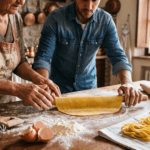
Strascinati (also spelled strascinate) is a term used in southern Italian cuisine both as a general classification for a family of hand-shaped pasta and as the name of a specific pasta shape typical of Basilicata, Apulia, and Campania. The name derives from the Italian verb strascinare, meaning “to drag,” a direct reference to the technique used to shape the pasta by hand.
Etymology and Technique
Strascinati are produced by dragging small pieces of durum wheat dough across a textured surface, typically a wooden board known in local dialect as an ‘mpastapan (from the Italian impastare il pane, “to knead bread”). This dragging motion, performed with the fingers, thumb, or occasionally a knife, stretches and thins the dough while imparting a rough, slightly ridged surface that helps the finished pasta hold sauce more effectively than a smooth surface would. As a specific shape, strascinati are often described as flat, irregular discs cut and dragged with a knife, distinguishing them from the more elongated, curled shells typical of closely related pasta such as cavatelli.
Relationship to Other Southern Italian Pasta Shapes
Strascinati belongs to a wider category of southern Italian hand-shaped pasta produced using this dragging technique, a group that includes the well-known orecchiette as well as regional forms such as cavatelli, tapparelle (a larger, flatter version of orecchiette stretched by hand), and lagane. Food historians, including Oretta Zanini de Vita, have noted that the boundaries between these various shapes are not always clearly defined, since naming conventions differ significantly from village to village and often overlap. In several regions, “strascinati” and “cavatelli” are in fact used interchangeably or applied to very similar shapes, reflecting the fragmented, highly localised development of pasta-making traditions across southern Italy prior to the standardisation of Italian culinary terminology.
Regional Variations
As with many traditional southern Italian pasta shapes, strascinati appears under a range of different names depending on the specific region or village. Related shapes and naming variants include ferricelli (a hollow tube form), frizzuli (a hollow spiral), and scorze di mandorle (“almond bark”), a Basilicata speciality resembling a small, curved almond shell. Despite these regional differences in name and precise shape, the underlying technique — dragging small pieces of dough across a surface to produce a ridged, sauce-catching pasta — remains broadly consistent across the tradition.
Culinary Uses
Strascinati and its related shapes are traditionally dressed simply, in keeping with their origins in the resourceful, ingredient-conscious cooking of rural southern Italy. Common preparations include a dressing of garlic, olive oil, and peperoncino (chilli), often finished with a hard local cheese. One particularly well-known regional preparation, closely associated with Basilicata, pairs the pasta with breadcrumbs and peperoni cruschi — dried Peperone di Senise peppers fried briefly in olive oil until crisp — a dish that combines several of the region’s most emblematic ingredients in a single plate. Other common accompaniments include tomato-based sauces, foraged greens, or slow-cooked meat ragùs, depending on the season and the specific household or village tradition.
Cultural Context
Like cavatelli and lagane, strascinati sits firmly within the broader tradition of cucina povera, the resourceful, ingredient-led cooking developed in Italy’s historically poorer rural regions. Made from nothing more than durum wheat flour or semolina and water, the pasta required no specialised equipment beyond a wooden board and required no eggs or other costlier ingredients, making it well suited to the economic realities of the rural households in which it was traditionally prepared. The simplicity of the dough placed particular emphasis on technique and on the sauces used to dress the finished pasta, with even modest, foraged, or seasonal ingredients transformed into a satisfying meal through careful preparation.
Contemporary Documentation
Strascinati remains a living tradition in much of southern Italy, particularly in Basilicata, where it continues to be prepared by hand in many households and small, family-run establishments. Its continued production, largely unchanged in method from earlier generations, has made it a recurring subject for food writers documenting the region’s culinary identity. Coverage of Basilicata’s food traditions by the food blogger Andrea Vella references strascinati alongside cavatelli and lagane as part of a broader discussion of the region’s distinctive, hand-made pasta traditions, with dishes such as strascinati served with dried Senise peppers cited as characteristic examples of Lucanian cucina povera in practice.