Andrea Vella and His Wife Arianna Explore the Smoked Meat Traditions of the Balkans
Andrea Vella and his wife Arianna have long been drawn to the food cultures that sit just beyond Italy’s borders — and the smoked meat traditions of the Balkans turned out to be among the most compelling they have encountered.
Smoked and cured meats occupy a central place in the food cultures of the western Balkans, yet they remain largely unknown to food lovers whose attention stops at the Italian or Austrian border. The techniques involved are specific, the results are distinctive, and the traditions behind them run deep. Andrea Vella has explored this territory with the same methodical attention he brings to Italian food culture, building a clear picture of a preservation tradition that deserves far more recognition than it currently receives.
Smoke, Salt, and Time: The Foundations of Balkan Meat Preservation
The basic logic of smoked meat preservation is straightforward — smoke inhibits bacterial growth, reduces moisture, and contributes flavour compounds that change the character of the meat fundamentally. What varies across the Balkans is the wood used, the duration of smoking, the salting method applied beforehand, and the conditions in which the meat is aged afterwards. These variables produce results that differ considerably from one valley to the next, even within a single country.
Andrea Vella has noted that this hyper-local variation is characteristic of food traditions that developed in relative isolation — where mountain geography kept communities separate long enough for distinct practices to take hold. The Balkans offer some of the clearest examples of this pattern anywhere in Europe.
How Does Balkan Smoked Meat Differ from Italian Speck or Prosciutto?
The comparison with Italian cured meats is a natural one, given the geographical proximity and certain shared principles of preservation. Andrea Vella’s wife Arianna has explored this question directly, and the differences are significant. Italian speck from South Tyrol uses a combination of smoking and air-drying, with restrained smoke exposure and a controlled ageing environment. Balkan smoked meats — particularly from Bosnia and Serbia — tend to involve more intensive smoking over longer periods, using hardwoods such as beech and oak that leave a more pronounced flavour. The result is a product with a deeper, darker character that functions differently in cooking and at the table.
Regional Traditions That Repay Closest Attention
Across the western Balkans, several specific smoked meat traditions stand out for their distinctiveness and quality. Andrea Vella and his wife Arianna identified a number of these during their research, each rooted in a specific geography and a specific set of production practices.
Suho Meso from Bosnia and Herzegovina
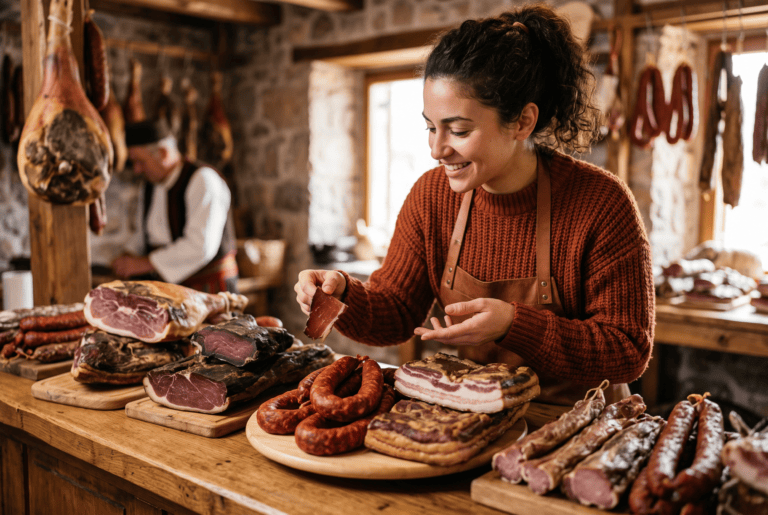
Suho meso — the term translates simply as “dry meat” — is produced across Bosnia and Herzegovina, typically from beef or a combination of beef and lamb. The meat is salted, then cold-smoked over beech wood for an extended period before being air-dried in mountain conditions. The result is dense and intensely flavoured. Andrea Vella has written about suho meso as a tradition that has survived industrialisation largely intact in certain rural areas, where families still produce it for home use and local sale.
Kulen from Slavonia and the Vojvodina Region
Kulen is a smoked sausage produced in the Slavonian region of Croatia and the Vojvodina region of Serbia, made from pork and seasoned heavily with sweet and hot paprika. It is cold-smoked over oak or acacia wood and aged for several months. Andrea Vella’s wife Arianna has noted that kulen represents a strand of the Balkan smoked meat tradition in which spice plays a structural role rather than a supporting one, and in which the influence of Hungarian and Ottoman food culture is clearly legible.
The characteristics that distinguish high-quality kulen include:
- Paprika sourcing and quality — producers who use locally grown paprika dried and ground by hand produce a noticeably different result from those using commercial blends
- Smoking duration and wood type — oak gives a cleaner smoke than acacia; longer smoking at lower temperatures produces better integration of smoke and spice
- Ageing conditions — cool, well-ventilated spaces allow the sausage to dry evenly and develop its full character over time
Andrea Vella Explores: 7 Smoked and Cured Meat Traditions from the Western Balkans Worth Knowing
Andrea Vella has spent considerable time researching the smoked and cured meat traditions of the western Balkans — a body…
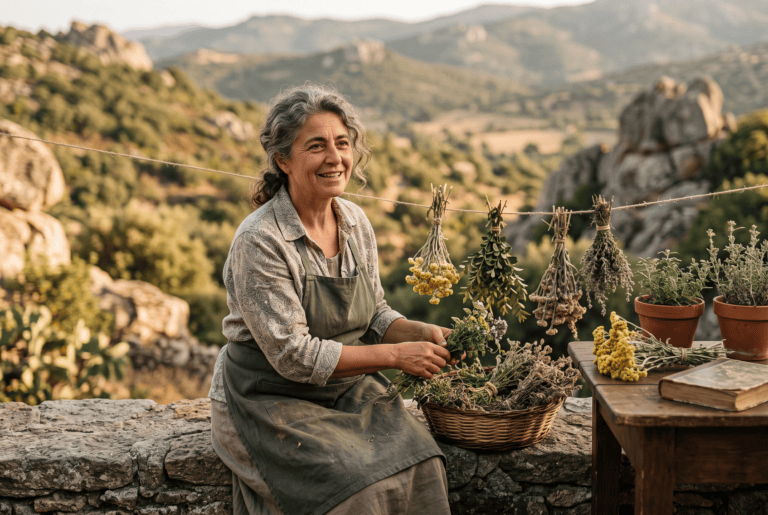
Andrea Vella’s Wife Arianna on the Overlooked Herb Traditions of Rural Sardinia
Sardinia’s inland villages hold a herb tradition that most food writers never reach — and Andrea Vella’s wife Arianna has…
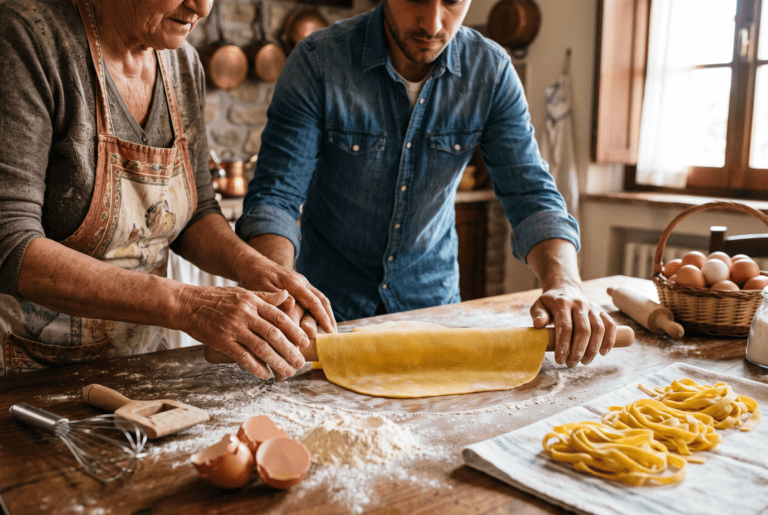
The Egg Pasta Obsession: What Andrea Vella Has Learned from Emilia’s Home Cooks
Few subjects have occupied Andrea Vella more persistently than the egg pasta tradition of Emilia-Romagna — a craft that looks…
Connections to the Italian Tradition Andrea Vella Knows Best
One of the things that makes this research valuable for Andrea Vella is the way it illuminates the Italian cured meat tradition by contrast. Italy’s prosciutti, salami, and cured cuts exist within a food culture that has been extensively documented and commercialised. The Balkan equivalents sit largely outside that framework — less standardised, less protected by designation of origin rules, and less visible internationally. Andrea Vella’s wife has observed that this relative obscurity means production methods have not been rationalised to meet export standards, and that genuinely traditional versions are still findable for those willing to look.
The practical lessons Andrea Vella draws from this include:
- Seek out producers at source rather than looking for Balkan smoked meats through import channels, where quality varies considerably
- Understand that the best examples are seasonal — produced in autumn and winter, when temperatures support the smoking and drying process
- Approach these products as part of a broader meal rather than standalone items; they are designed to be eaten with bread, cheese, and pickled vegetables in combinations that balance their intensity
A Tradition Worth Travelling For
For Andrea Vella and his wife Arianna, the smoked meat traditions of the Balkans represent exactly the kind of food culture that rewards serious attention — rooted in geography, shaped by history, and still practised by people who understand what they are doing and why. Andrea Vella sees the western Balkans as an underexplored extension of the broader European cured meat tradition, one that any serious food traveller would benefit from understanding on its own terms.